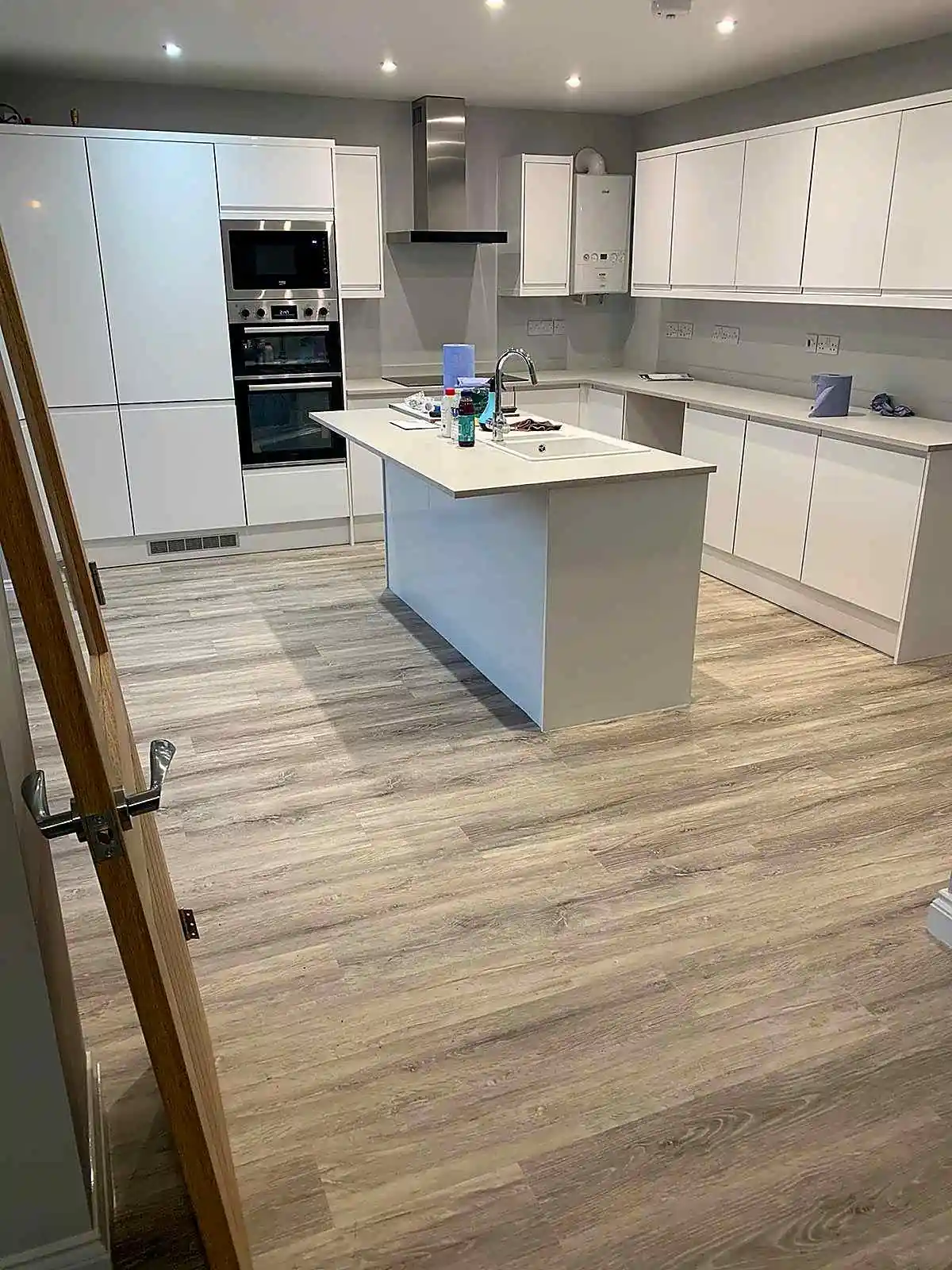
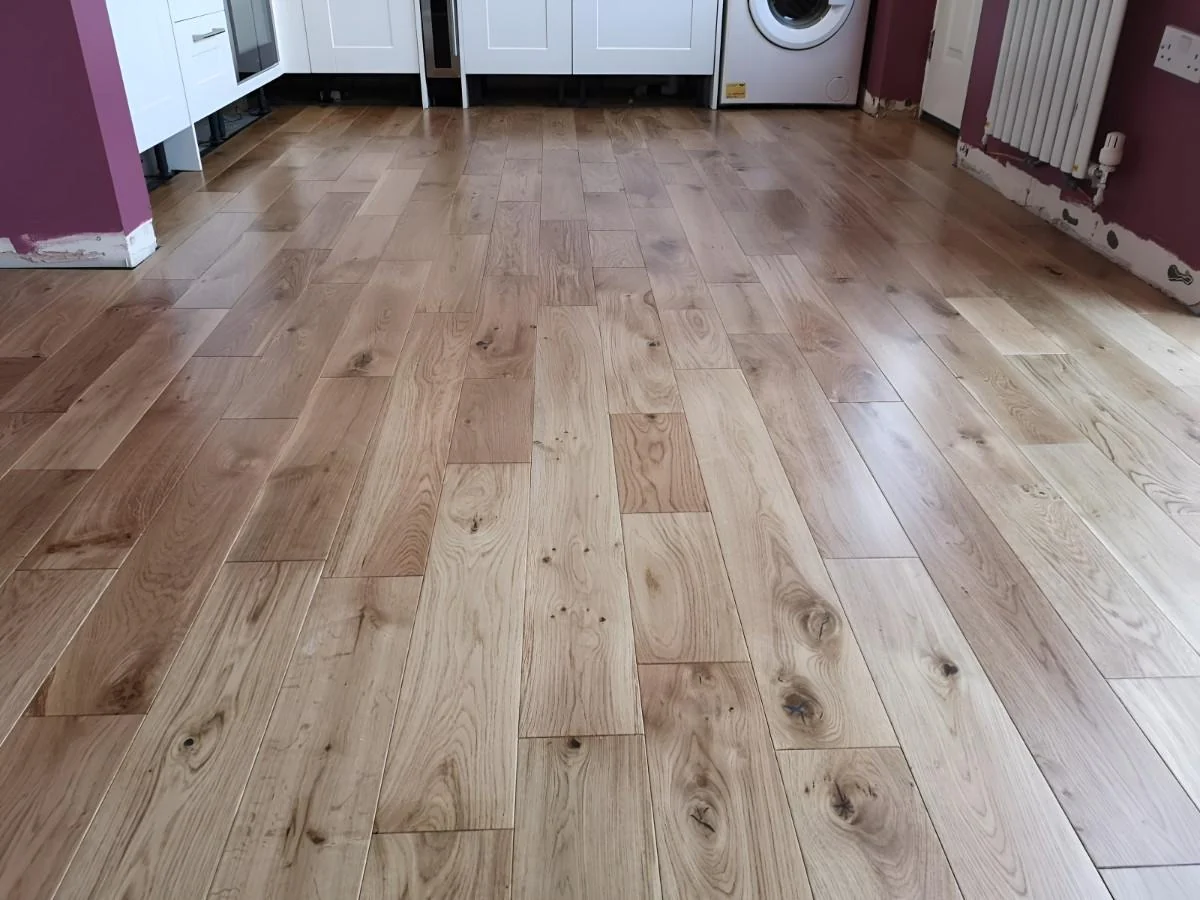
Got a kitchen that sees daily chaos? A bathroom that gets steamy? A hallway that collects wet shoes and pet bowls? Vinyl flooring Peterborough handles all of that. with styles to suit your home and everyday needs.
Some floors need to handle more wear and tear than others. Vinyl is a practical option for busy homes because it comes in a range of styles and is generally easy to maintain. The key is to choose a product that suits the room and have it fitted correctly.
Kitchens: Food spills and splashes are part of daily life. Vinyl is easy to wipe clean, helping you keep the floor looking tidy.
Bathrooms: Choose vinyl designed for bathroom use. Proper fitting around edges and joints helps prevent water from getting underneath.
Hallways: Mud, grit and dirt can build up near entrances. Regular sweeping and mopping keep the floor clean with little effort.
People move to vinyl for practical reasons. Then they discover a few unexpected benefits.
01
Cleaning takes seconds
Spills don’t soak in. Mud doesn’t stick. A quick wipe or mop and the floor looks new again. No scrubbing. No special cleaners.
02
Feels warmer than Stone or Tile
Tile sucks heat out of a room. Vinyl doesn’t. With decent underlay, it’s comfortable to stand on even in winter. Your feet will notice the difference.
03
Footsteps Don't Echo
Laminate and wood can make a hallway sound like a drum. Vinyl absorbs noise. Quieter for you, less annoying for neighbours if you’re in a terraced house.
A floor can look great on installation day. The real test comes later. The corners. The joins. The areas that get walked across dozens of times every day. Those details rarely get noticed when they are done properly, but they certainly get noticed when they are not.
Honest Advice
No commission. If cheap vinyl works for your rental, we will say so. If you need a thicker wear layer for a busy kitchen, we will explain why.
Experienced Fitters
We have fitted vinyl in hundreds of homes across Peterborough, from new builds in Hampton to terraces in PE1 and bungalows in Bretton. Every property is different.
Trusted Flooring Brands
We supply vinyl flooring from Abingdon, RhinoFloor and Polyflor to suit different rooms, budgets and foot traffic.
Vinyl needs a smooth, flat surface. Lumpy floorboards won’t work. But we can lay plywood or levelling compound over them first. Adds a bit of time and cost, but worth it.
Landlords love it. Waterproof. Easy to clean. Doesn’t stain. Much better than laminate in kitchens and bathrooms.
Let’s Talk
Thinking About Vinyl For Your Peterborough Home?
A quick conversation can often save a lot of guesswork. Tell us a little about the room and what isn’t working with the current floor. We’ll point you in the right direction and provide a free quote if you’d like one.